
The Shivling That Holds a Thousand Universes.
Some temples are built for worship.
Some are built for history.
And once in a very long while, a temple is built to carry an entire civilization forward.
Rising quietly yet powerfully in Bihar, close to the sacred cultural landscape of Mithila, the Virat Ramayan Mandir is not just another grand religious structure. It is an audacious vision — to transform the Ramayana from a revered scripture into a living, walkable, stone-carved experience. Every inch of this mandir is being shaped with the intention that future generations should not just read the Ramayana, but step inside it.
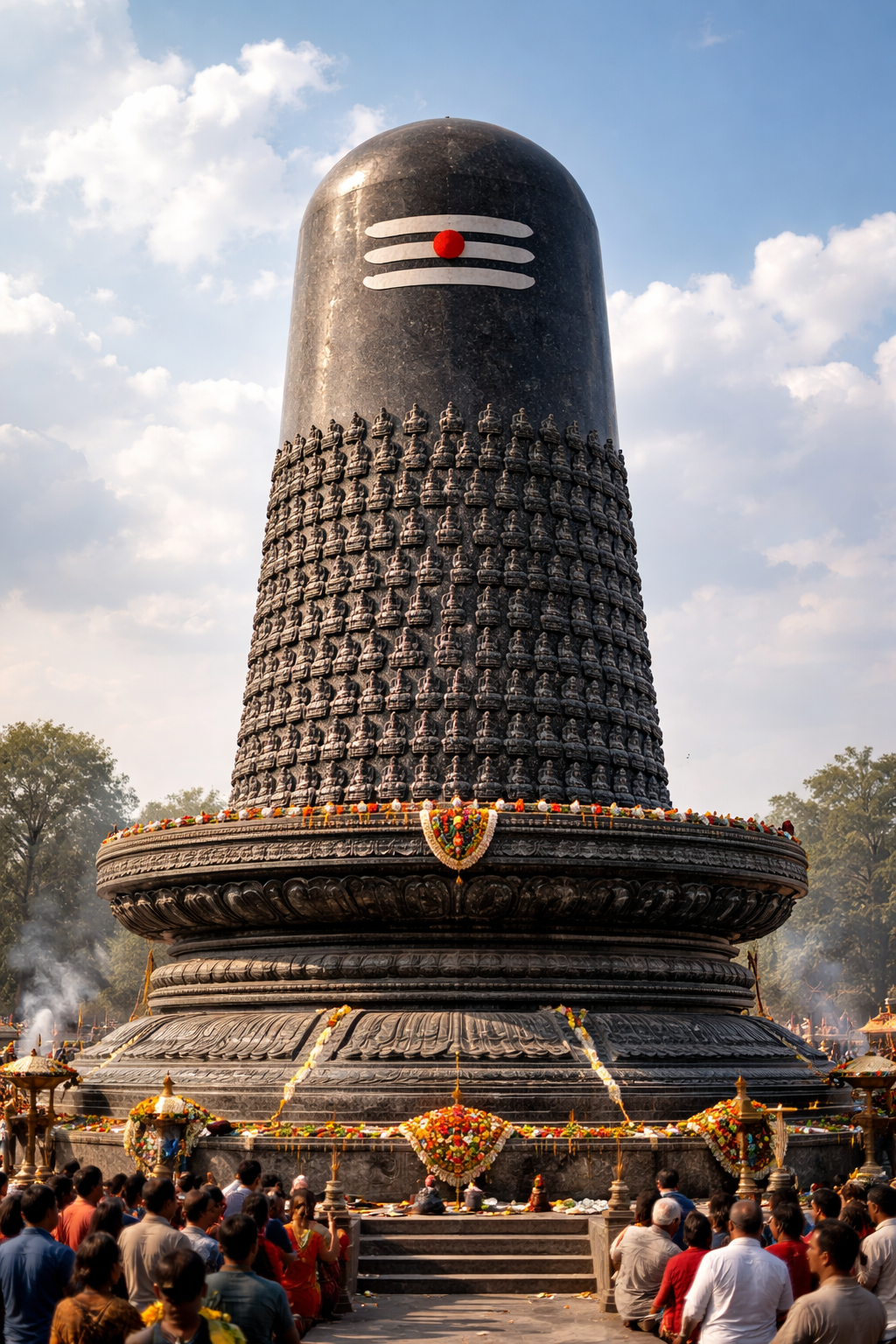
At the spiritual heart of this colossal complex stands a presence so rare that it has already entered the realm of legend — a 33-foot-tall, 210-ton monolithic Shivling, carved from a single block of granite and carrying within it 1,008 miniature Shivlings.
A Mandir Designed Like a Sacred Journey, Not a Structure
The Virat Ramayan Mandir is envisioned as one of the largest Ramayana-themed temple complexes in the world, but its true grandeur lies not in size alone. The temple is designed as a narrative space, where architecture itself becomes storytelling.
As devotees walk through its vast corridors and mandaps, they are meant to relive the Ramayana — from dharma and exile to devotion, sacrifice, and victory. Pillars are intricately sculpted with scenes from the epic, allowing stone to speak where words once did. Wide pathways and open sacred courtyards are planned not just for crowds, but for contemplation, ensuring the temple remains accessible, immersive, and timeless.
This is not a mandir meant for rushed darshan. It is a mandir meant to slow you down.
The Shivling That Redefines Scale and Sanctity
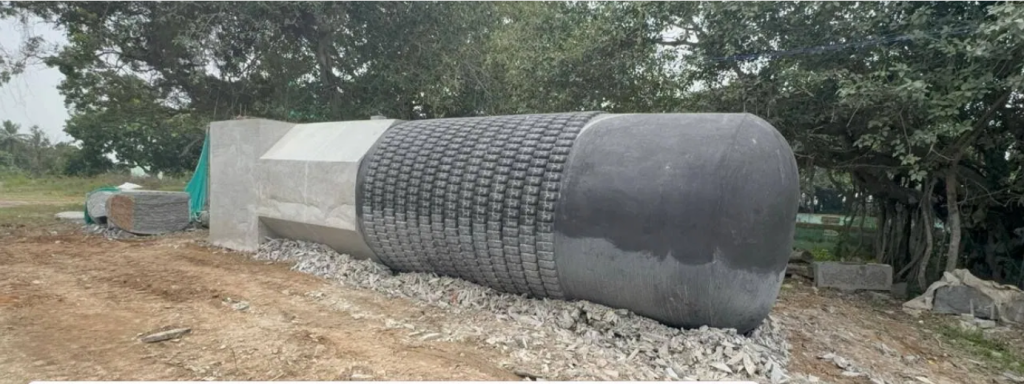
At the center of this monumental vision stands the Shivling — a marvel not only of faith, but of human discipline and ancient knowledge. Rising approximately 33 feet high and weighing around 210 metric tons, it is carved from one uninterrupted piece of granite. There are no joints, no assembled parts, no room for error.
Crafted in Mahabalipuram, a land where stone has been shaped into temples for over a millennium, this Shivling was sculpted by master artisans following strict Shilpa Shastra principles. The work demanded years of patience, because a single crack would have rendered the entire stone useless. What stands today is not just granite — it is restraint, precision, and devotion made permanent.
One Shivling, 1,008 Manifestations of Shiva
What truly elevates this Shivling beyond scale is what lies carved upon it.
Across its surface are 1,008 miniature Shivlings, each one carefully hand-engraved. This choice was neither aesthetic nor decorative. It was deeply philosophical.
In Shaiva tradition, Shiva is worshipped through his 1,008 sacred names, each name representing a distinct cosmic attribute — the ascetic, the householder, the destroyer, the protector, the dancer, the eternal witness. By engraving 1,008 Shivlings, the artisans symbolically contained every manifestation of Shiva within a single form, making the main Shivling spiritually complete.
The number itself carries profound meaning. The digit one represents the supreme consciousness. Zero symbolizes infinity and the formless void. Eight signifies eternity and cosmic balance. Together, 1008 expresses Shiva’s essence — the one who is infinite and timeless.
On a deeper level, the engravings transform the Shivling into a three-dimensional mandala, a sacred cosmic diagram. Each miniature Shivling becomes a point of meditation, and together they convey a powerful truth of Shaiva philosophy:
all forms arise from Shiva, exist within Shiva, and dissolve back into Shiva.
This is why the number could not be rounded or altered. One thousand would have been ordinary. One hundred symbolic. 1,008 is eternal.
A Journey That Became a Pilgrimage
Moving a 210-ton monolith from Tamil Nadu to Bihar was never just a logistical task. It became a sacred procession.
Over a distance of more than 2,000 kilometers, special multi-axle vehicles were used, roads were reinforced, and routes were carefully planned. As the Shivling passed through towns and villages, people gathered not out of curiosity, but reverence. Many folded their hands, some offered prayers, others simply stood in silence.
Few moments in recent times have so clearly shown how faith in India does not remain confined — it travels, connects regions, and unites traditions.
The Harmony of Ram and Shiva in One Sacred Space
Placing a monumental Shivling within a Ramayana-based temple complex is not accidental. It reflects a deeply Indian spiritual truth — that Shaivism and Vaishnavism are not separate paths, but intertwined expressions of the same consciousness.
Shiva is the eternal witness to Ram’s journey, and Ram embodies dharma upheld by Shiva. The Virat Ramayan Mandir silently reinforces this unity, reminding devotees that Indian spirituality has always been inclusive, layered, and whole.
A Future Landmark Already Rooted in Eternity
The Virat Ramayan Mandir is still rising, stone by stone, yet its essence is already complete. It is being built not to chase records, headlines, or momentary attention, but to stand as a civilizational landmark — a place where faith, art, engineering, and philosophy converge.
When completed, it will draw devotees, scholars, artists, and seekers from across the world. Not just to see something large, but to feel something lasting.
Some temples impress the eye.
Some move the heart.
This one is being built to do both — and to endure long after time forgets the rest.